

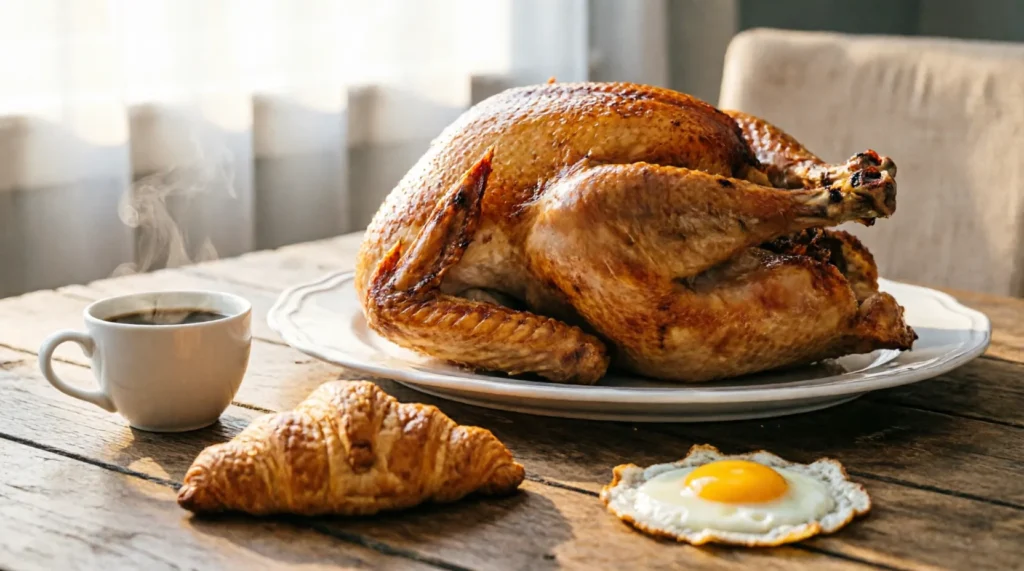
This deceptively simple question has tripped up countless people at breakfast tables, classroom icebreakers, and family game nights. The answer is clever precisely because it plays with how we think about meals and time. Below, I’ll reveal the solution to this classic riddle and share a collection of food-themed brain-teasers that are perfect for your next gathering.
Top 5 Breakfast Riddles
1. What can you not eat for breakfast?
Answer: Lunch and dinner
2. I’m light in the morning, heavy at night, and I’m always on your plate before you take a bite. What am I?
Answer: Breakfast (the word itself is “light” as in not heavy, and “heavy” as in important/substantial, plus you have breakfast before eating)
3. What has hands but can’t clap, sits on your wall, and tells you when breakfast is ready?
Answer: A clock
4. I come in a shell but I’m not a nut, I’m often cracked open but I’m not a safe, and I’m a breakfast favorite. What am I?
Answer: An egg
5. What gets wetter the more it dries, and you use it every morning at the breakfast table?
Answer: A towel
The Classic “What Can You Not Eat for Breakfast?” Riddle Explained
This riddle is a masterclass in misdirection. When someone asks you what you can’t eat for breakfast, your mind immediately jumps to foods: “Can’t eat steak?” “Can’t eat ice cream?” “Can’t eat sushi?” You’re thinking about food restrictions, dietary rules, or cultural norms.
But the trick lies in reinterpreting the question entirely. The answer isn’t a food at all—it’s other meals. You cannot eat “lunch” for breakfast, and you cannot eat “dinner” for breakfast, because lunch and dinner aren’t foods; they’re meal times.
When I’ve tested this riddle with groups, the most common wrong answer I hear is “dinner” alone, which is partially correct but incomplete. People fixate on the evening meal because it feels most opposite to breakfast. But the complete answer includes both lunch and dinner.
Another frequent wrong guess is “supper,” which is really just another word for dinner, so it’s close but still misses lunch. The riddle works because it exploits our assumption that the answer must be a specific food item rather than a category or concept.
This riddle has staying power because it’s accessible to all ages. My 8-year-old niece solved it in about thirty seconds, while some adults have spent five minutes listing impossible breakfast foods before the lightbulb moment hit. The beauty is in its simplicity.
Variations on the Breakfast Riddle Theme
Once you understand the logic behind the classic riddle, you’ll spot similar patterns in other meal-based brain-teasers. Here are genuine variations that play with the same concept: For more, see Breakfast.
1. What can you catch but not throw for breakfast?
Answer: A cold (you can catch a cold, but the riddle misdirects you toward breakfast foods)
2. What do you break before you eat breakfast?
Answer: Your fast (as in “breakfast” literally means breaking your overnight fast)
3. What meal can you never eat for dinner?
Answer: Breakfast and lunch (this flips the original riddle on its head)
These variations maintain the core trick: they sound like they’re asking about food, but the answer involves wordplay about the nature of meals themselves. The breakfast riddle family is particularly effective because everyone has direct experience with these daily rituals, making the misdirection more surprising.
More Food & Meal Riddles
Here’s a collection of food-themed riddles with distinct answers that work well after you’ve revealed the breakfast riddle:
1. I have a heart that doesn’t beat, I can be sweet or I can be sour, and I’m often served at breakfast. What am I?
Answer: An artichoke (has a “heart”) or more commonly at breakfast: a grapefruit (has segments like a heart, can be sweet or sour)
2. What kind of room has no doors or windows but you can still have breakfast in it?
Answer: A mushroom
3. I’m yellow and curved, monkeys love me, and I make a great breakfast addition. What am I?
Answer: A banana
4. What has a head and a tail but no body, and you might flip it at breakfast?
Answer: A coin (or a pancake, which you flip)
5. I’m full of holes but still hold water, I’m often found in your breakfast bread. What am I?
Answer: A sponge (or holes in bread like English muffins)
6. What can you hold in your right hand but never in your left hand, especially at breakfast?
Answer: Your left hand (or your left elbow)
7. I’m red and juicy, often confused with a vegetable, and some people eat me for breakfast. What am I?
Answer: A tomato
8. What goes through towns and over hills but has never moved, and delivers your breakfast news?
Answer: A road
9. I have cities but no houses, forests but no trees, and rivers but no water. You might study me over breakfast. What am I?
Answer: A map
10. What can travel around the world while staying in a corner, like your morning newspaper?
Answer: A stamp
Tricky Breakfast & Food Riddles
These riddles require an extra layer of thinking and work well for older kids and adults who’ve already warmed up with the easier ones:
1. The more you take away from me, the bigger I get. What am I, and how does this relate to breakfast?
Answer: A hole (or your appetite before breakfast)
2. I’m not alive, but I can grow; I don’t have lungs, but I need air; I don’t have a mouth, but water kills me. You might see me near breakfast. What am I?
Answer: Fire (for cooking breakfast)
3. What can you give away but still keep, like your breakfast recipe?
Answer: A secret (or a copy of something)
4. I speak without a mouth and hear without ears. I have no body, but I come alive with the morning. What am I?
Answer: An echo
5. What has many keys but can’t open a single lock, like your breakfast cereal box?
Answer: A piano (or a keyboard)
6. I’m tall when I’m young and short when I’m old. You might watch me burn during breakfast. What am I? For more, see Riddle.
Answer: A candle
7. What can you break without touching it, like your breakfast routine?
Answer: A promise (or a habit)
8. What has one eye but can’t see, like a breakfast food?
Answer: A needle (or a pineapple, which has “eyes”)
9. I have no life, but I can die. You might say this about your breakfast plans. What am I?
Answer: A battery (or “plans” themselves)
10. What gets sharper the more you use it, like your morning appetite?
Answer: Your brain (or a pencil)
11. I’m light as a feather, yet the strongest person can’t hold me for five minutes, especially before breakfast. What am I?
Answer: Your breath
12. What can fill a room but takes up no space, like the smell of breakfast cooking?
Answer: Light (or smell)
How to Use These Riddles
These riddles work brilliantly in multiple settings. At family breakfast on weekends, I use one or two as conversation starters—kids love the challenge, and it’s screen-free entertainment. In the classroom, teachers can use them as warm-up activities or transition fillers between subjects.
For road trips, keep a list handy and take turns asking each other; the breakfast riddle is perfect because everyone understands the concept immediately. At parties or pub quizzes, these work as icebreaker questions between rounds. I’ve also used them during scavenger hunts, where solving a riddle reveals the next clue location.
The key is matching difficulty to your audience. Start with the Top 5 for mixed-age groups, then move to the trickier ones for adults or older teens who want a real challenge.
Frequently Asked Questions
What is the answer to “What can you not eat for breakfast?”
The answer is lunch and dinner. These aren’t foods you can eat—they’re meal times. The riddle tricks you into thinking about specific foods when the answer is actually about the concept of meals themselves.
Why do people struggle with this riddle?
Most people immediately think of food items when they hear “eat” and “breakfast” together. Our brains make an assumption that the answer must be a type of food, so we start listing things like “pizza” or “spaghetti” instead of recognizing the wordplay about meal times.
What age group enjoys these riddles most?
In my experience, kids aged 7-12 love these because they’re accessible but still challenging. Adults enjoy them too, especially when they realize they’ve been overthinking the answer. The breakfast riddle specifically works across all ages because everyone understands the concept of different meals.
Can I use these riddles in educational settings?
Absolutely. they help develop critical thinking and lateral reasoning skills. These breakfast and food riddles are particularly good for teaching students to question their assumptions and think about language from different angles.

Ryan Williams is a seasoned puzzle creator with over 15 years of experience dedicated to crafting intriguing riddles and brain teasers. With a background in cognitive science and a Master’s degree in Linguistics from a prestigious university, Ryan is renowned for his ability to weave language intricacies into mind-bending challenges. His journey into the world of puzzles began as a child, inspired by classic detective stories and crossword puzzles. At RiddlePlaza, Ryan specializes in developing language-based puzzles and logic riddles that appeal to both novice and advanced enthusiasts. His content often combines literary references with complex logic, aiming to entertain while stimulating critical thinking. Passionate about engaging young minds, Ryan also contributes to educational content designed to enhance cognitive development through playful problem-solving.