

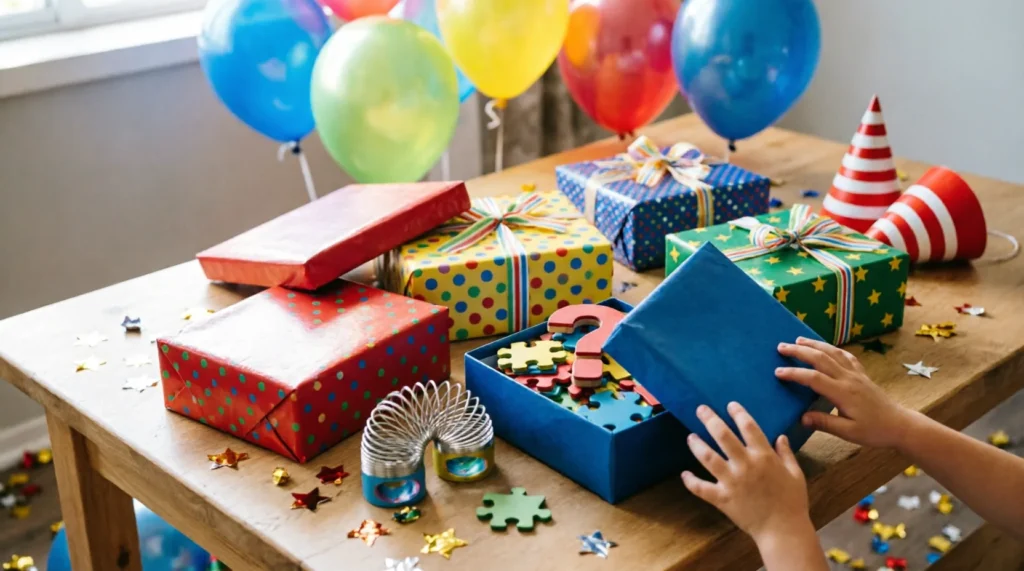
Nothing kills the awkward silence at a children’s party faster than a well-timed puzzle. Whether you are hosting a backyard bash, managing a classroom celebration, or just looking for a fun way to pass time during cake setup, birthday riddles for kids with answers are your secret weapon. These brain teasers turn passive guests into active participants, sparking laughter and friendly competition without requiring any props or setup. I have tested these specific riddles on groups ranging from energetic six-year-olds to skeptical pre-teens, and they consistently deliver high engagement levels. Below is a curated collection designed to keep the energy up and the smiles wide.
Top 5 Birthday Riddles
These are the heavy hitters. If you only have time for a few puzzles, start here. They strike the perfect balance between being solvable enough to feel rewarding and tricky enough to require a moment of thought.
I have a face but no eyes, hands but no arms. I tell you when it’s time for cake, but I never eat any. What am I?
Answer: A clock
This is my go-to opener. When I run this one with kids aged 7-10, the wrong guess is almost always “a calendar” because they focus on the “time” aspect. The “face” and “hands” clues usually tip them off if they pause to visualize it.
I come once a year, but I can be celebrated every day. I have candles but no fire hazard if you’re careful. Everyone gets older when I arrive. What am I?
Answer: A birthday
Simple, thematic, and sets the tone. It reminds everyone why they are gathered while getting their brains working.
I am wrapped in colorful paper, tied with a bow. You shake me to guess what’s inside, but you won’t know until you undo. What am I?
Answer: A present (or gift)
Kids love the sensory detail of shaking a box. This riddle works well because it describes an action they are likely doing or anticipating during the party.
I am tall when I am young, and short when I am old. I glow with warmth and help make a wish. What am I?
Answer: A candle
This is a classic riddle structure adapted for the birthday theme. The “tall when young, short when old” line is a staple in riddle history, but adding the “make a wish” context makes it immediately relevant to the occasion. According to Riddle, these types of descriptive puzzles rely on metaphorical language that challenges the solver to look beyond literal interpretations.
I have layers of sponge and cream, I’m sweet and often seen with a team. You cut me into slices, but I’m not a pizza. What am I?
Answer: A birthday cake
The comparison to pizza usually gets a laugh. It’s an easy win for younger children, which helps build their confidence before tackling harder ones.
Easy Birthday Riddles
Perfect for younger children (ages 4-7) or as warm-ups to get everyone comfortable. These rely on direct associations with party elements.
- I float in the air, I’m round and bright. If you hold me too tight, I might take flight. What am I?
Answer: A balloon
- I am a hat that you wear for one day. I’m pointy and colorful, then thrown away. What am I?
Answer: A party hat
- I make a loud noise when you pull my string. I’m not a dog, but I certainly sing. What am I?
Answer: A party blower (or noisemaker)
- I am a song that everyone knows. We sing it together as the candle glows. What am I?
Answer: Happy Birthday
- I am a game where you hit a hanging object. Candy falls out when I break. What am I?
Answer: A piñata
- I am a piece of paper that tells you when to come. Without me, you might stay home. What am I?
Answer: An invitation
- I am a streamer that hangs from the wall. I’m long and curly, decorating the hall. What am I?
Answer: Confetti or streamers
- I am a flavor that is often pink. I’m sweet and cold, a delicious drink. What am I?
Answer: Strawberry soda (or lemonade)
Funny Birthday Riddles
Humor is a great equalizer. These riddles rely on puns or silly logic, which tends to resonate well with kids who enjoy wordplay. Note that some of these are “groaners,” which is exactly the reaction you want.
- Why did the birthday cake go to the doctor?
Answer: Because it was feeling crumby!
- What do you call a bear with no teeth and a birthday?
Answer: A gummy bear!
- Why shouldn’t you tell a secret at a birthday party?
Answer: Because the walls have ears, and the guests have mouths!
- What kind of music do balloons hate?
Answer: Pop music!
This one is a favorite among my 9-year-old testers. They usually shout “Rock and Roll!” before realizing the pun. It’s a great example of how Birthday celebrations often incorporate playful language and jokes as part of the social ritual.
- Why did the candle go to school?
Answer: To get brighter!
- What do you give a sick lemon on its birthday?
Answer: Lemon-aid!
- Why was the birthday card empty?
Answer: Because the writer had nothing to say!
- What do you call a dinosaur that crashes your birthday party?
Answer: A Jurassic park guest!
Tricky Birthday Riddles
These are for the kids who think they are too smart for the easy stuff. They require lateral thinking. Be prepared for some intense staring and furrowed brows.
- The more you take from me, the bigger I get. What am I?
Answer: A hole (often used in digging contexts, but applies to cutting cake too!)
- I speak without a mouth and hear without ears. I have no body, but I come alive with wind. What am I?
Answer: An echo
- What has keys but can’t open locks, space but no room, and you can enter, but not go inside?
Answer: A keyboard
This one often stumps adults too. It’s a good reminder that riddles don’t always have to be about physical party objects; they can be about the tools we use to send digital invitations.
- I am always coming, but never arrive. What am I?
Answer: Tomorrow
- What belongs to you, but other people use it more than you do?
Answer: Your name
- I have cities, but no houses. I have mountains, but no trees. I have water, but no fish. What am I?
Answer: A map
- What can travel around the world while staying in a corner?
Answer: A stamp
Math-Themed Birthday Riddles
Great for sneaking in some education. These work well for older kids (ages 8-12) who enjoy logic puzzles.
- If you have three apples and you take away two, how many do you have?
Answer: Two (the ones you took)
This is a classic trick question. Kids often answer “one” because they subtract, but the question asks how many you have, not how many are left in the original pile.
- I am an odd number. Take away a letter and I become even. What number am I?
Answer: Seven (remove the ‘s’ and it becomes ‘even’)
- If there are 10 candles on the cake and you blow out 3, how many candles are left?
Answer: 10 (they are still there, just extinguished)
- How many months have 28 days?
Answer: All 12 of them
- If you divide 30 by half and add 10, what do you get?
Answer: 70 (30 divided by 0.5 is 60, plus 10 is 70)
This one is notoriously difficult for kids who interpret “divide by half” as “divide by 2.” It’s a great teaching moment for order of operations and language precision.
- I am a number. My tens digit is 5 more than my ones digit. My ones digit is 3. What number am I?
Answer: 83
Short Birthday Riddles
Quick-fire rounds for when attention spans are waning or you need a fast transition between activities.
- What goes up but never comes down?
Answer: Age
- What has a neck but no head?
Answer: A bottle (of soda)
- What has one eye but can’t see?
Answer: A needle (for sewing banners)
- What gets wetter as it dries?
Answer: A towel
- What has a thumb and four fingers but is not alive?
Answer: A glove
- What has a bottom at the top?
Answer: Your legs (when doing a handstand!)
How to Use These Riddles
Knowing the riddles is only half the battle; delivering them effectively is key to keeping the party momentum going. Here are a few proven strategies from my experience hosting family events.
- The Cake Wait: While the candles are being lit or the cake is being sliced, drop one or two easy riddles. It keeps the kids focused on the table rather than running wild.
- Scavenger Hunt Clues: Write these riddles on cards and hide them around the party area. Each solved riddle leads to the next clue, with the final prize being the piñata or the gift bag station.
- Pass the Parcel: Wrap a small prize in multiple layers of paper. Between each layer, include a riddle. The child holding the parcel must answer correctly to unwrap the next layer.
- Car Ride Home: If you are dropping friends off, keep a list of the “Tricky” riddles handy. It turns the post-party fatigue into a fun, quiet game for the ride home.
Frequently Asked Questions
What is the best age range for these birthday riddles? These riddles are primarily designed for children aged 5 to 12. The “Easy” section works well for kindergarteners, while the “Math” and “Tricky” sections are better suited for upper elementary students. For teens, you might need to lean more heavily into the puns or lateral thinking puzzles.
How do I handle it if a child can’t solve a riddle? Never let a kid feel stuck. If silence stretches beyond ten seconds, offer a hint. For example, for the “clock” riddle, you might say, “Look at the wall above the door.” The goal is engagement, not stumping them into frustration. If they still can’t get it, reveal the answer cheerfully and move on.
Can I use these riddles for virtual birthday parties? Absolutely. In fact, riddles work even better online because they don’t require physical props. You can share your screen with the text or just read them aloud. The “Short” riddles are particularly effective for Zoom calls where attention drifts quickly.
Where did these riddles come from? Many of these are classic folk riddles that have been adapted for modern contexts. The structure of riddles has remained consistent for centuries, evolving from oral traditions to printed collections. As noted in historical records, riddles have long been used as a form of social bonding and intellectual play across cultures.

Ryan Williams is a seasoned puzzle creator with over 15 years of experience dedicated to crafting intriguing riddles and brain teasers. With a background in cognitive science and a Master’s degree in Linguistics from a prestigious university, Ryan is renowned for his ability to weave language intricacies into mind-bending challenges. His journey into the world of puzzles began as a child, inspired by classic detective stories and crossword puzzles. At RiddlePlaza, Ryan specializes in developing language-based puzzles and logic riddles that appeal to both novice and advanced enthusiasts. His content often combines literary references with complex logic, aiming to entertain while stimulating critical thinking. Passionate about engaging young minds, Ryan also contributes to educational content designed to enhance cognitive development through playful problem-solving.