

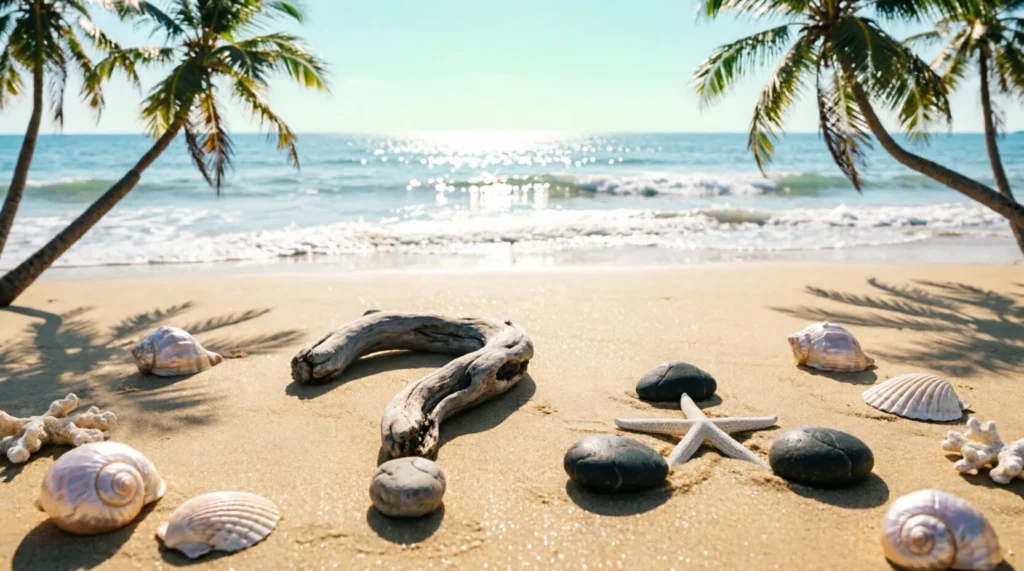
Nothing captures the imagination quite like a puzzle that transports you to the shoreline. Whether you are planning a summer party, teaching a geography lesson, or just want to stump your friends with some clever wordplay, riddles centered around coastal themes offer a perfect blend of challenge and fun. This collection is designed for puzzle lovers who enjoy lateral thinking and appreciate the subtle clues hidden in descriptions of sand, tides, and sun.
Top 5 Beach Riddles
These five riddles represent the cream of the crop. They range from playful puns to genuine logic puzzles that require you to think about the physical properties of the seaside environment. Try these out first to gauge your group’s skill level.
I have cities, but no houses. I have mountains, but no trees. I have water, but no fish. What am I?
Answer: A map (specifically, a map of the beach or coast)
Note: This is a classic riddle that often trips people up because they look for a physical object found on the shore. When I use this in classrooms, students often guess “a postcard” or “a photograph,” which are close, but the traditional answer remains a map.
I run but never walk. I have a mouth but never talk. I have a bed but never sleep. What am I?
Answer: A river (that flows into the beach)
Note: While the answer is technically a river, this riddle is frequently used in beach contexts because rivers meet the sea at the shore. It is a great warm-up riddle because the imagery of flowing water fits the coastal theme perfectly.
What has a head and a tail but no body?
Answer: A coin (often found buried in the sand)
Note: This is a tricky one because people immediately think of animals. In a beach context, you can frame it as something you might find while metal detecting. The “head” and “tail” refer to the sides of the coin.
I am always hungry, I must always be fed. The finger I touch will soon turn red. What am I?
Answer: Fire (as in a beach bonfire)
Note: This riddle adds a bit of danger and excitement to the collection. It is essential to emphasize safety when using this riddle with younger children, perhaps framing it around a controlled campfire setting.
What goes up and down but doesn’t move?
Answer: The stairs (to the beach boardwalk or dunes)
Note: This is a pure logic puzzle. People often guess “the tide,” which is a common wrong answer because tides do move physically. The stairs remain stationary while people move up and down them.
Easy Beach Riddles
These riddles are perfect for younger children or as quick icebreakers. They rely on simple observations and straightforward wordplay.
- What do you call a dog that loves the shore?
Answer: A labrador retriever (or simply a “beach dog”)
- What kind of shorts do clouds wear?
Answer: Thunderwear
- What do you call a fish wearing a bowtie?
Answer: Sofishticated
- Why did the sun go to school?
Answer: To get brighter
- What do you call a sleeping bull on the sand?
Answer: A bulldozer
- What falls but never breaks?
Answer: Nightfall (over the beach)
- What breaks but never falls?
Answer: Daybreak (over the ocean)
- What has eyes but cannot see?
Answer: A potato (often served at beach picnics)
- What has keys but can’t open locks?
Answer: A piano (playing beach tunes)
- What has a neck but no head?
Answer: A bottle (of sunscreen or soda)
Hard Beach Riddles
These puzzles require deeper lateral thinking. They are designed to stump adults and older teenagers who think they have seen it all. According to Wikipedia, riddles have been used throughout history to test wisdom and wit, and these examples continue that tradition by requiring solvers to look beyond the obvious.
- I speak without a mouth and hear without ears. I have no body, but I come alive with wind. What am I?
Answer: An echo (in the sea caves or dunes)
Note: This is genuinely difficult because people often guess “the ocean” or “waves.” The key clue is “hear without ears,” which points to sound reflection rather than the source of the sound itself.
- The more you take, the more you leave behind. What am I?
Answer: Footsteps (in the sand)
Note: This is a philosophical riddle that works beautifully in a beach setting. The visual of footprints trailing behind you as you walk along the shore makes the answer click into place.
- I have holes on the top and bottom. I have holes on my left and on my right. And I have holes in the middle, yet I still hold water. What am I?
Answer: A sponge (used for cleaning up after a beach day)
Note: This is a classic physical property riddle. The “holes” are the porous structure of the sponge, which allows it to absorb liquid despite being full of empty space.
- What can travel around the world while staying in a corner?
Answer: A stamp (on a postcard sent from the beach)
Note: This riddle plays with perspective. The stamp stays in the corner of the envelope, but the envelope travels globally. It is a favorite among trivia enthusiasts.
- I am not alive, but I grow; I don’t have lungs, but I need air; I don’t have a mouth, but water kills me. What am I?
Answer: Fire (a beach bonfire)
Note: This is the same answer as one of the top riddles, but phrased differently to test if solvers can recognize the same concept from new clues. Water extinguishing fire is the critical giveaway.
- What has many needles, but doesn’t sew?
Answer: A pine tree (near the beach boardwalk)
Note: This is tricky because “needles” usually implies sewing. In a coastal forest context, pine needles are abundant. It tests vocabulary flexibility.
Funny Beach Riddles
Humor is a great way to keep the mood light during a puzzle session. These riddles rely on puns and silly imagery.
- What do you call a bear with no teeth?
Answer: A gummy bear
- Why did the crab never share?
Answer: Because he was shellfish
- What do you call a fake noodle?
Answer: An impasta
- Why did the golfer bring two pairs of pants?
Answer: In case he got a hole in one
- What do you call a dinosaur that crashes his car?
Answer: Tyrannosaurus Wrecks
- Why did the scarecrow win an award?
Answer: Because he was outstanding in his field
- What do you call a snowman with a six-pack?
Answer: An abdominal snowman
- Why did the cookie go to the doctor?
Answer: Because he felt crummy
- What do you call a lazy kangaroo?
Answer: A pouch potato
- Why did the math book look sad?
Answer: Because it had too many problems
Tricky Wordplay Riddles
These riddles rely on double meanings and homophones. They are excellent for testing language skills and attention to detail. The term “tricky” often implies a level of deception or complexity in the puzzle structure, as noted in discussions of puzzle design, where the solver must navigate misleading clues to find the true answer.
- What word is spelled incorrectly in every dictionary?
Answer: Incorrectly
- What begins with T, ends with T, and has T in it?
Answer: A teapot
- What has one eye but can’t see?
Answer: A needle
- What has hands but can’t clap?
Answer: A clock
- What has a bank but no money?
Answer: A riverbank
- What has a face and two hands but no arms or legs?
Answer: A clock
- What gets wetter the more it dries?
Answer: A towel
- What belongs to you but is used more by others?
Answer: Your name
- What has a thumb and four fingers but is not alive?
Answer: A glove
- What has a head and a tail but no body?
Answer: A coin
Short and Snappy Riddles
Sometimes you need a quick puzzle to fill a brief moment. These one-liners are perfect for rapid-fire rounds.
- What has to be broken before you can use it?
Answer: An egg
- I’m tall when I’m young, and I’m short when I’m old. What am I?
Answer: A candle
- What month of the year has 28 days?
Answer: All of them
- What is full of holes but still holds water?
Answer: A sponge
- What question can you never answer yes to?
Answer: Are you asleep yet?
- What is always in front of you but can’t be seen?
Answer: The future
- What has legs but doesn’t walk?
Answer: A table
- What has a ring but no finger?
Answer: A telephone
- What has a spine but no bones?
Answer: A book
- What has a voice but no mouth?
Answer: An echo
How to Use These Riddles
Integrating these puzzles into your activities can enhance engagement and create memorable moments. Here are some practical ways to use this collection:
- Beach Scavenger Hunt: Hide clues around the shore or boardwalk. Each solved riddle leads to the next location. For example, a riddle about “footsteps” could lead to a spot with visible tracks in the sand.
- Campfire Entertainment: Gather around the bonfire and take turns asking riddles. The dark setting adds a layer of mystery, making the answers more satisfying when revealed.
- Classroom Geography Lessons: Use the riddles to introduce concepts like tides, erosion, and coastal ecosystems. The “river” and “map” riddles are particularly effective for teaching spatial awareness.
- Road Trip Games: Keep passengers entertained during long drives to the coast. The short riddles are ideal for quick bursts of mental stimulation without requiring props.
- Party Icebreakers: Print the riddles on cards and place them on tables. Guests can solve them while waiting for food or drinks, sparking conversation among strangers.
Frequently Asked Questions
What is a good riddle for young children at the beach?
Simple observational riddles work best. Try “What has eyes but cannot see?” (a potato) or “What has keys but can’t open locks?” (a piano). These rely on familiar objects and simple wordplay that kids can grasp quickly. Avoid abstract concepts like time or philosophy for this age group.
How do these riddles help with learning?
Riddles encourage critical thinking, vocabulary expansion, and lateral reasoning. By forcing solvers to look at words from multiple angles, they improve cognitive flexibility. In an educational setting, they can make dry topics like geography or physics more engaging and memorable.
Can I use these riddles for a commercial event?
Yes, these riddles are generally considered part of the public domain or common folklore. However, always check specific copyright laws if you are publishing a compiled book or app. For casual use at parties, schools, or community events, you are free to use them without restriction.
What is the hardest riddle in this collection?
The “echo” riddle (“I speak without a mouth…”) is often cited as the most challenging because it requires abstract thinking about sound waves. Many adults initially guess “wind” or “ocean,” missing the specific clue about hearing without ears. It rewards patience and careful listening to the wording.

Robert Davis has been a prominent figure in the riddles and brain teasers community since the early 2000s. Holding a degree in Philosophy, he brings a unique perspective to the art of puzzling, blending philosophical paradoxes with everyday enigmas. Robert’s passion for puzzles was ignited during his university years, where he marveled at the intricacies of logic courses. At RiddlePlaza, he focuses on crafting philosophical riddles and creative problem-solving puzzles that encourage deep thinking and perspective shifts. Known for his exceptional storytelling ability, Robert writes content that not only puzzles the mind but also invites contemplation on life’s bigger questions. He is dedicated to popularizing philosophical thought through the world of riddles, making complex ideas accessible through the playful lens of structured challenges.