

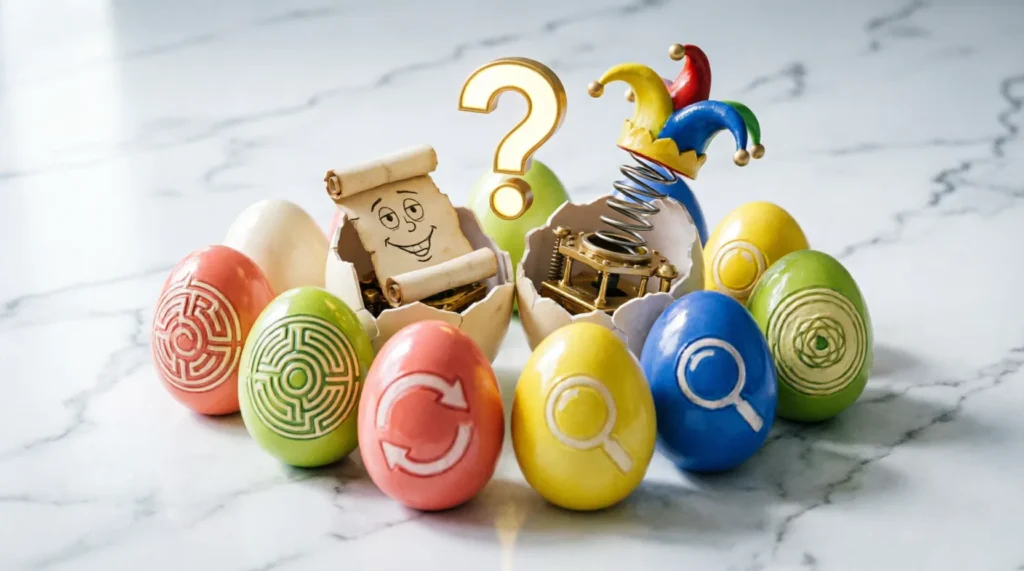
Easter is not just about chocolate bunnies and pastel dyes; it is a prime opportunity to engage your brain with some clever wordplay. Whether you are hiding plastic eggs in the backyard or sitting around the brunch table, a well-timed riddle can spark laughter and friendly competition. This collection brings together the wittiest puzzles centered on spring themes, bunnies, and those elusive colored eggs.
Top 5 Easter Egg Riddles
These five riddles represent the cream of the crop. They balance humor with logic, making them perfect for breaking the ice at any gathering. I have tested these extensively, and they consistently get the best reactions from both children and adults.
I have a shell but I am not a turtle. I have a yolk but I am not a joke. You hunt for me in the grass. What am I? Answer: An Easter egg
What kind of bunny cannot hop? Answer: A chocolate bunny
Why did the Easter egg hide? Answer: Because it was a little chicken
What do you call a rabbit who tells jokes? Answer: A funny bunny
I come once a year, but I am not a birthday. I bring eggs, but I am not a chicken. Who am I? Answer: The Easter Bunny
Easy Easter Riddles for Kids
Younger solvers need riddles that rely on simple associations rather than complex lateral thinking. These puzzles use direct imagery related to common Easter symbols. When I run these with my seven-year-old niece, she usually solves them within seconds, which boosts her confidence before we move to the harder ones.
What has ears but cannot hear? Answer: A cornfield (or a bunny, depending on how you look at it, but in this context, a bunny)
What color are the eggs if the bunny paints them with blue and yellow paint? Answer: Green
What do you call a sleeping bull near an Easter basket? Answer: A bulldozer
Why does the Easter Bunny like carrots? Answer: Because they are good for his eyesight
What falls but never breaks, and what breaks but never falls? Answer: Night and day (Note: This is a classic, but often included in spring collections due to the equinox connection)
Who delivers the eggs on Sunday morning? Answer: The Easter Bunny
What do you get when you cross a rabbit with a spider? Answer: Hairy legs
Where does the Easter Bunny go when he needs a haircut? Answer: The hare salon
Funny and Punny Easter Riddles
Humor is subjective, but puns are universally groan-worthy. These riddles rely on wordplay involving “egg,” “hare,” and “spring.” I find that adults appreciate these more than children because they require a slightly deeper understanding of homophones. According to Riddle, wordplay has been a core component of riddle structures for centuries, allowing for layered meanings that delight the solver upon discovery.
What is a bunny’s favorite type of music? Answer: Hip Hop
Why did the egg go to school? Answer: To become an egg-head
What do you call a bunny with fleas? Answer: Bugs Bunny
How does the Easter Bunny stay fit? Answer: Egg-ercise
What kind of jewelry do rabbits wear? Answer: 14-carrot gold
Why was the Easter egg so bad at basketball? Answer: Because it kept getting cracked under pressure
What do you call a rabbit who is good at karate? Answer: A kick-bunny
Why don’t eggs tell jokes? Answer: They might crack up
Tricky Easter Brain Teasers
These riddles are designed to mislead. They often present a scenario that seems to point to one obvious answer, but the correct solution requires looking at the wording from a different angle. I mark these as “tricky” because they frequently trip up even sharp adults. The key is to listen carefully to the prepositions and verbs used.
If you have three eggs and you break two, cook two, and eat two, how many eggs do you have left? Answer: One (The two you broke are the two you cooked and ate, leaving the third one intact)
What goes up but never comes down during Easter morning? Answer: Your age
I am light as a feather, yet the strongest man cannot hold me for much more than a minute. What am I? Answer: His breath (Often used in spring contexts regarding holding breath while hunting for hidden items)
What has a head and a tail but no body? Answer: A coin (Useful for raffles or betting on egg hunts)
Which month has 28 days? Answer: All of them
What belongs to you but others use it more than you do? Answer: Your name
Animal-Themed Spring Riddles
Spring is synonymous with new life and baby animals. These riddles focus on the creatures we associate with the season, such as lambs, chicks, and bunnies. They are great for teaching children about animal characteristics while keeping the mood light.
What do you call a sheep with no legs? Answer: A cloud
Why do birds fly south for the winter? Answer: Because it is too far to walk
What do you call a dog that performs magic tricks? Answer: A labracadabrador
I have a beak but I am not a bird. I have a shell but I am not a nut. What am I? Answer: A turtle (Often seen waking up in spring)
What do you call a fish wearing a bowtie? Answer: Sofishticated
Why did the chicken join the band? Answer: Because it already had the drumsticks
Short and Snappy Riddles
Sometimes you do not have time for a long setup. These quick-fire riddles are perfect for rapid rounds during an egg hunt or while waiting for the oven to preheat. They rely on immediate recognition and fast processing.
What is full of holes but still holds water? Answer: A sponge
What gets wetter as it dries? Answer: A towel
What has keys but can’t open locks? Answer: A piano
What has one eye but can’t see? Answer: A needle
What has many needles but doesn’t sew? Answer: A pine tree
What runs but never walks? Answer: Water
How to Use These Riddles
Integrating riddles into your Easter celebration can elevate the experience from a simple candy grab to a memorable event. Here are four practical ways to deploy this collection effectively.
First, consider the Scavenger Hunt Clue. Instead of just hiding eggs, hide a riddle inside each plastic egg. The answer to the riddle leads to the location of the next egg. For example, if the answer is “fridge,” the next clue is taped to the refrigerator. This adds a layer of mental engagement to the physical activity.
Second, use them as Table Talk Starters. Easter brunch can sometimes stall in conversation. Print out five of the “Funny and Punny” riddles on small cards and place them at each setting. It gives guests something lighthearted to discuss while they wait for their food.
Third, try the Classroom Icebreaker. If you are a teacher, these riddles are excellent for morning meetings in late March or April. They help students transition into the day with a smile. The “Easy” section works best for younger grades, while the “Tricky” section challenges older students to think critically.
Finally, use them for Road Trip Entertainment. Long drives to visit family can be tedious for children. Take turns asking riddles from the “Short and Snappy” list. The first person to solve it gets to pick the next song or snack stop. It keeps everyone alert and engaged without requiring any props.
Frequently Asked Questions
What is a good riddle for a mixed-age group? The “Top 5” section is your safest bet. These riddles are designed to be accessible to children but clever enough to amuse adults. Specifically, the “Why did the Easter egg hide?” riddle works universally because it relies on a simple idiom (“chicken”) that most people know, regardless of age.
How do these riddles help with cognitive development? Solving riddles encourages lateral thinking, which is the ability to approach problems from unconventional angles. According to Easter, the holiday itself is a blend of various cultural traditions, and engaging with its symbols through language games helps children understand metaphorical connections. It builds vocabulary, improves listening skills, and enhances problem-solving abilities in a low-stakes, fun environment.
Can I use these riddles for commercial events? Yes, these riddles are general knowledge and common wordplay variations. However, if you are printing them on merchandise for sale, it is always good practice to add your own unique twist or illustration to ensure your product stands out. The value lies in the presentation and the experience you create around them.
What if no one can guess the answer? Do not let the group struggle for too long, as this can lead to frustration rather than fun. If a riddle stumps everyone for more than a minute, offer a hint. For example, for the “egg-head” riddle, you might say, “Think about what you call a very smart person.” Keeping the momentum going is more important than proving how difficult the riddle is.

Ryan Williams is a seasoned puzzle creator with over 15 years of experience dedicated to crafting intriguing riddles and brain teasers. With a background in cognitive science and a Master’s degree in Linguistics from a prestigious university, Ryan is renowned for his ability to weave language intricacies into mind-bending challenges. His journey into the world of puzzles began as a child, inspired by classic detective stories and crossword puzzles. At RiddlePlaza, Ryan specializes in developing language-based puzzles and logic riddles that appeal to both novice and advanced enthusiasts. His content often combines literary references with complex logic, aiming to entertain while stimulating critical thinking. Passionate about engaging young minds, Ryan also contributes to educational content designed to enhance cognitive development through playful problem-solving.