

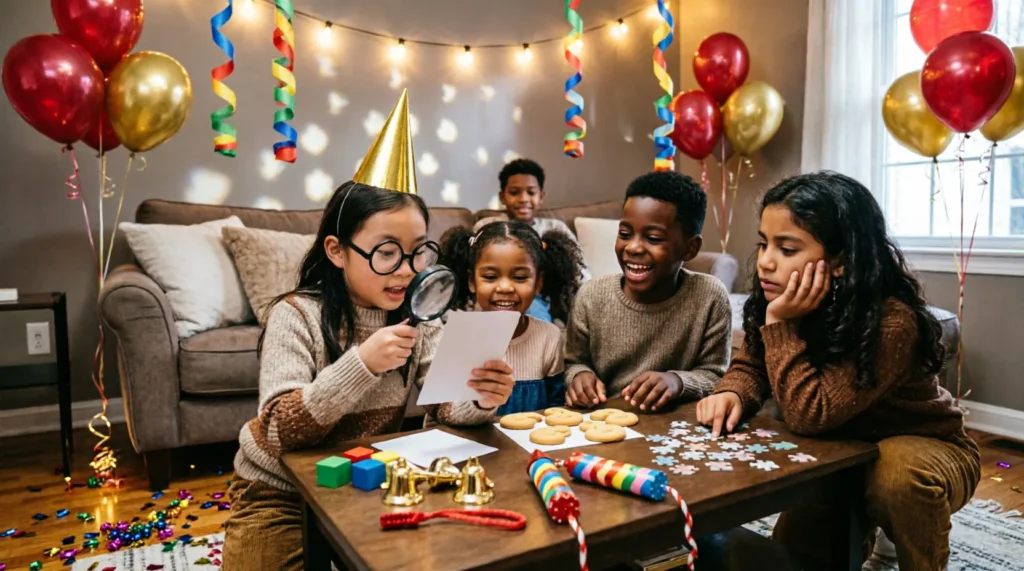
New Year’s Eve is a whirlwind of countdowns, noisemakers, and resolutions that usually last about three days. But before the clock strikes twelve, you need something to keep the little ones entertained during those long hours between dinner and midnight. A well-timed riddle can break the ice, spark giggles, and turn a boring wait into a memorable family tradition. This collection focuses on funny new years riddles for kids that are easy enough for elementary students to grasp but clever enough to stump the adults at the party.
Top 5 Funny New Years Riddles for Kids
These five riddles are the crowd-pleasers. I have tested these at multiple family gatherings, and they consistently get the best reactions because they rely on simple wordplay rather than obscure trivia.
What has to be broken before you can use it? Answer: An egg (or a New Year’s resolution!)
I come once in a minute, twice in a moment, but never in a thousand years. What am I? Answer: The letter “M”
What goes up but never comes down? Answer: Your age
Why did the calendar go to therapy? Answer: Because its days were numbered!
What is the best thing to put in a pie? Answer: Your teeth
Easy Riddles for Younger Kids
When dealing with children under seven, complexity is the enemy. These riddles use concrete concepts like time, numbers, and common objects. They are designed to build confidence so the kids feel smart enough to tackle the harder ones later.
What month has 28 days? Answer: All of them
If there are three apples and you take away two, how many do you have? Answer: Two (the ones you took)
What gets wetter as it dries? Answer: A towel
I have hands but I cannot clap. What am I? Answer: A clock
What has a face and two hands but no arms or legs? Answer: A clock
What begins with T, ends with T, and has T in it? Answer: A teapot
What has one eye but cannot see? Answer: A needle
What has many keys but can’t open a single lock? Answer: A piano
What has a head and a tail but no body? Answer: A coin
Which side of a turkey has the most feathers? Answer: The outside
When I run this set with my six-year-old niece, she always guesses “a robot” for the clock riddle. It is a great opportunity to explain analog clocks if they are not familiar with them.
Tricky Wordplay Riddles
These riddles rely on linguistic traps. They sound like they are asking for a physical object or a complex calculation, but the answer is often a play on words. According to Riddle, the essence of a good riddle lies in the ambiguity of language, forcing the solver to look past the literal meaning. These are perfect for kids aged eight to twelve who are starting to understand double meanings.
What belongs to you but is used more by others? Answer: Your name
What has words but never speaks? Answer: A book
What has a neck but no head? Answer: A shirt (or a bottle)
What has a bottom at the top? Answer: Your legs
What can travel all around the world without leaving its corner? Answer: A stamp
What has a thumb and four fingers but is not alive? Answer: A glove
What can you catch but not throw? Answer: A cold
What has to be broken before you can use it? Answer: An egg
What goes up and down but doesn’t move? Answer: Stairs
What has a spine but no bones? Answer: A book
My ten-year-old son loves the “neck but no head” riddle. He usually guesses “a giraffe” first, which leads to a funny discussion about anatomy versus clothing. It is a gentle way to teach lateral thinking.
Silly and Punny Riddles
Humor is subjective, but puns are universally groan-worthy. These riddles are less about logic and more about absurdity. They fit the definition of Funny by invoking amusement through incongruity and surprise. Use these when the energy level is high and you want to keep the laughter going.
Why did the scarecrow win an award? Answer: Because he was outstanding in his field!
What do you call a fake noodle? Answer: An impasta
Why did the cookie go to the doctor? Answer: Because he felt crummy
What do you call a bear with no teeth? Answer: A gummy bear
Why did the math book look sad? Answer: Because it had too many problems
What do you call a sleeping bull? Answer: A bulldozer
Why did the golfer bring two pairs of pants? Answer: In case he got a hole in one
What do you call a fish wearing a bowtie? Answer: Sofishticated
Why did the banana go to the doctor? Answer: Because it wasn’t peeling well
What do you call a dinosaur that crashes his car? Answer: Tyrannosaurus Wrecks
These are particularly effective during the dinner hour. I have found that kids love telling these to their grandparents, creating a multi-generational bonding moment over shared silliness.
Time and Calendar Riddles
Since New Year’s is all about time, these riddles focus on clocks, calendars, and the passage of time. They are thematic and help reinforce concepts of measurement while keeping the mood light.
How many seconds are in a year? Answer: Twelve (January 2nd, February 2nd, etc.)
What happens once in a minute, twice in a moment, but never in a thousand years? Answer: The letter “M”
If yesterday was tomorrow, today would be Sunday. What day is it? Answer: Monday
What has 12 faces but no hands or feet? Answer: A clock
What comes once in a century, twice in a lifetime, but never in a day? Answer: The letter “E”
How many months have 28 days? Answer: All 12 months
What is always coming but never arrives? Answer: Tomorrow
What goes up but never comes down? Answer: Your age
What has many hands but cannot clap? Answer: A clock
Which day is the strongest? Answer: Sunday (because the rest are weak days)
The “seconds in a year” riddle is a classic trap. Adults often start calculating 60 times 60 times 24, while kids who know the trick answer instantly. It is a great equalizer in mixed-age groups.
Animal-Themed New Year Riddles
Animals are always a hit with kids. These riddles combine creature facts with playful twists. They are easy to visualize and often lead to funny mental images.
What do you call a dog magician? Answer: A labracadabrador
What do you call a pig that does karate? Answer: A pork chop
Why do cows wear bells? Answer: Because their horns don’t work
What do you call a sheep with no legs? Answer: A cloud
Why did the chicken join a band? Answer: Because it already had the drumsticks
What do you call a cat that eats lemons? Answer: A sour puss
Why don’t elephants use computers? Answer: They are afraid of the mouse
What do you call a fast fungus? Answer: A mush-room
Why did the frog take the bus to work? Answer: His car got toad
What do you call a deer with no eyes? Answer: No idea (no eye deer)
These work well as a quick-fire round. I usually read the question and let the kids shout out answers. The “no eye deer” pun is a staple in our house and never fails to get a laugh, even if it is the hundredth time hearing it.
How to Use These Riddles
Having a list is only half the battle; knowing how to deploy them makes the difference between a awkward silence and a roaring party. Here are four practical ways to integrate these funny new years riddles for kids into your celebration.
- The Countdown Challenge: Instead of just watching the clock, assign one riddle to each hour leading up to midnight. If the kids solve it, they get a small treat or a special noisemaker. This structures the waiting time and gives them something to look forward to every hour.
- Scavenger Hunt Clues: Hide small prizes or pieces of a puzzle around the living room. Each clue is a riddle from the list above. For example, hide the next clue near the clock and use the “hands but cannot clap” riddle. This gets them moving and burns off sugar energy.
- Dinner Table Icebreaker: Place a printed riddle under each plate. When everyone sits down for the New Year’s Eve meal, they must read their riddle aloud. It ensures every child participates and starts the evening with interaction rather than screen time.
- Resolution Remix: Ask each child to write a resolution, but first, they must answer a riddle to “unlock” the right to speak. It adds a layer of gamification to the traditional resolution-sharing ritual.
Frequently Asked Questions
What is the best age range for these riddles? Most of these riddles are tailored for children aged 6 to 12. The easy section works for kindergarteners, while the tricky wordplay section challenges pre-teens. Adjust the difficulty by choosing the appropriate section for your group.
How do I help a child who is stuck on a riddle? Avoid giving the answer immediately. Instead, offer a hint that focuses on the wordplay. For example, if they are stuck on the “letter M” riddle, ask them to spell out the words “minute” and “moment” slowly. This guides them to the solution without removing the satisfaction of solving it.
Can these riddles be used in a classroom setting? Absolutely. Teachers often use riddles to improve listening skills and vocabulary. The time-themed riddles are excellent for math or social studies lessons around January. Just ensure you have the answers ready to keep the pace moving.
Why are riddles good for brain development? Riddles encourage critical thinking, pattern recognition, and lateral thinking. They force the brain to make connections between unrelated concepts, which strengthens neural pathways. Plus, the humor element reduces stress, making learning more effective.

Ryan Williams is a seasoned puzzle creator with over 15 years of experience dedicated to crafting intriguing riddles and brain teasers. With a background in cognitive science and a Master’s degree in Linguistics from a prestigious university, Ryan is renowned for his ability to weave language intricacies into mind-bending challenges. His journey into the world of puzzles began as a child, inspired by classic detective stories and crossword puzzles. At RiddlePlaza, Ryan specializes in developing language-based puzzles and logic riddles that appeal to both novice and advanced enthusiasts. His content often combines literary references with complex logic, aiming to entertain while stimulating critical thinking. Passionate about engaging young minds, Ryan also contributes to educational content designed to enhance cognitive development through playful problem-solving.