

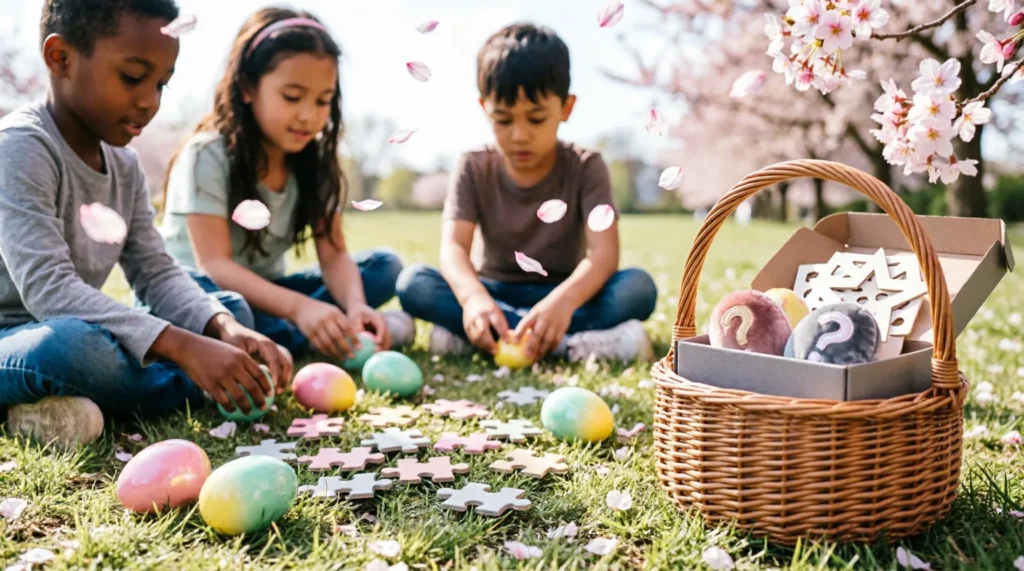
April showers bring May flowers, but they also bring a perfect opportunity to sharpen young minds with clever wordplay. Whether you are looking for classroom activities, rainy-day entertainment, or Easter-themed fun, this collection of April riddles for kids offers a delightful mix of seasonal puzzles. These brain teasers range from simple spring observations to tricky logic problems that will keep children aged 6 to 12 engaged and laughing.
Top 5 April Riddles for Kids
These five riddles represent the best of the season, combining weather, holidays, and nature into concise puzzles that are perfect for starting a game session.
I have no voice, yet I roar in the sky. I have no wings, yet I fly high. I bring life to the earth with my gentle touch. What am I? Answer: Rain
I come once in a minute, twice in a moment, but never in a thousand years. What am I? Answer: The letter “M”
I am a box that holds keys without locks, yet they can unlock your soul. What am I? Answer: A piano (or a music box)
The more you take, the more you leave behind. What am I? Answer: Footsteps
I speak without a mouth and hear without ears. I have no body, but I come alive with wind. What am I? Answer: An echo
Easy Spring Riddles for Younger Kids
These riddles are designed for younger children or those new to puzzle-solving. They rely on direct observation of the natural world and common April experiences. When I test these with first-graders, they usually solve the flower and rain riddles instantly, which builds their confidence for the harder ones later.
I am yellow and bright, I follow the sun’s light. In April I bloom, chasing away the gloom. What am I? Answer: A daffodil
I fall from the sky but I’m not snow. I help the gardens grow. What am I? Answer: Rain
I have a tail and I hop around. In spring, I’m often found. I love carrots and lettuce too. Who am I? Answer: A bunny
I am green and small, I sit on a wall. When it rains, I don’t mind at all. What am I? Answer: A frog
I start with an E, end with an E, but only contain one letter. What am I? Answer: An envelope
I am a bird that arrives in spring. I build my nest and sing. My coat is black and white. What am I? Answer: A magpie (or a robin, depending on region)
What has roots as nobody sees, Is taller than trees, Up, up it goes, And yet never grows? Answer: A mountain
I am wet when I’m drying. What am I? Answer: A towel
What belongs to you, but other people use it more than you do? Answer: Your name
I have cities, but no houses. I have mountains, but no trees. I have water, but no fish. What am I? Answer: A map
Funny April Fool’s Day Riddles
April 1st is synonymous with pranks and laughter. These riddles play on logic and unexpected twists, making them perfect for sharing on April Fool’s Day. Kids love these because the answers often subvert their expectations. In my experience, the “breakfast” riddle is a classic crowd-pleaser because it forces them to think about the sequence of events rather than just the objects involved.
What can you never eat for breakfast? Answer: Lunch or dinner
Why did the scarecrow win an award? Answer: Because he was outstanding in his field!
What has a head and a tail but no body? Answer: A coin
What kind of room has no doors or windows? Answer: A mushroom
Why did the boy bring a ladder to school? Answer: Because he wanted to go to high school!
What has many needles but doesn’t sew? Answer: A pine tree
Why did the cookie go to the doctor? Answer: Because he felt crummy!
What do you call a fake noodle? Answer: An impasta!
Why can’t you give Elsa a balloon? Answer: Because she will let it go!
What do you call a bear with no teeth? Answer: A gummy bear!
Tricky Logic Riddles for Older Kids
These riddles require a bit more lateral thinking. They are ideal for children aged 9 and up who enjoy a challenge. According to Wikipedia, riddles have been used throughout history to test wisdom and wit, and these examples continue that tradition by forcing solvers to look beyond the obvious meaning of words. I find that these particular riddles often stump adults too, which makes them great for family competitions.
The person who makes it has no need of it; the person who buys it has no use for it. The person who uses it can neither see nor feel it. What is it? Answer: A coffin
I am always coming, but never arrive. What am I? Answer: Tomorrow
What has a neck but no head? Answer: A bottle (or a shirt)
What gets wet while drying? Answer: A towel
I have keys but no locks. I have a space but no room. You can enter, but can’t go outside. What am I? Answer: A keyboard
What can travel around the world while staying in a corner? Answer: A stamp
What has one eye, but can’t see? Answer: A needle
What goes up but never comes down? Answer: Your age
I am not alive, but I grow; I don’t have lungs, but I need air; I don’t have a mouth, but water kills me. What am I? Answer: Fire
What has a bottom at the top? Answer: Your legs
Nature and Weather Riddles
April is a month of transition, where winter’s chill meets spring’s warmth. These riddles focus on the natural phenomena characteristic of this time of year. As noted in historical records, April derives its name from the Latin word aperire, meaning “to open,” referring to the opening of buds and flowers. These riddles celebrate that renewal.
I am invisible, but I can knock down trees. I can be gentle or fierce. What am I? Answer: Wind
I am colorful and appear after the rain. I have seven colors but no paint. What am I? Answer: A rainbow
I am soft and green, I cover the ground. In spring, I am found all around. What am I? Answer: Grass
I sleep in the winter and wake in the spring. I buzz and I sting. What am I? Answer: A bee
I am a cloud that touches the ground. I make everything white and silent. What am I? Answer: Fog
I drop from the sky in drops so small. I help the flowers stand tall. What am I? Answer: Raindrops
I am a seed that falls from a tree. I grow into a giant, strong and free. What am I? Answer: An acorn
I am a bird that sings in the morning light. My song is sweet and bright. What am I? Answer: A lark
I am a flower that blooms in the cold. My petals are white and gold. What am I? Answer: A snowdrop
I am a insect that glows in the dark. I light up the park. What am I? Answer: A firefly
Short and Snappy Riddles
Sometimes you need a quick brain teaser to fill a short wait time. These riddles are concise and can be solved in seconds. They are perfect for car rides or quick classroom breaks. My favorite thing about these is how they force kids to listen carefully to every word, as the answer is often hidden in plain sight.
What has a bed but never sleeps? Answer: A river
What has a face and two hands but no arms or legs? Answer: A clock
What goes up and down but doesn’t move? Answer: Stairs
What has to be broken before you can use it? Answer: An egg
What month of the year has 28 days? Answer: All of them
What is full of holes but still holds water? Answer: A sponge
What question can you never answer yes to? Answer: Are you asleep?
What is always in front of you but can’t be seen? Answer: The future
What has a thumb and four fingers but is not alive? Answer: A glove
What runs but never walks, has a mouth but never talks, has a head but never weeps, has a bed but never sleeps? Answer: A river
How to Use These Riddles
Riddles are versatile tools for engagement and learning. Here are some practical ways to incorporate them into your daily routine:
- Classroom Warm-ups: Start the day with one riddle on the board. It wakes up students’ brains and encourages critical thinking before lessons begin.
- Family Game Night: Divide into teams and take turns reading riddles. Keep score for correct answers. The team with the most points wins a small prize, like choosing the next movie.
- Scavenger Hunts: Hide clues around the house or yard. Each clue is a riddle that leads to the next location. For example, a riddle about a fridge could lead to the kitchen.
- Road Trip Entertainment: Keep a list of riddles handy for long car rides. They are much more engaging than screens and help pass the time quickly.
- Easter Egg Hunts: Attach riddles to plastic eggs. Children must solve the riddle to know where to look for the next egg.
Frequently Asked Questions
What is a good riddle for a 7-year-old? For a 7-year-old, choose riddles with concrete answers related to animals or everyday objects. The “daffodil” or “bunny” riddles from the Easy section are excellent choices because they rely on familiar concepts and simple rhyme schemes.
How do these riddles help children learn? Riddles enhance vocabulary, improve listening skills, and encourage lateral thinking. They teach children to look beyond literal meanings and consider multiple perspectives, which is a crucial skill for problem-solving in math and reading comprehension.
Can I use these riddles for April Fool’s Day? Absolutely! The Funny April Fool’s Day section is specifically designed for this purpose. These riddles are lighthearted and often involve puns, which align perfectly with the spirit of playful deception associated with April 1st.
What if my child can’t solve a riddle? Offer hints rather than the answer immediately. Break down the riddle into smaller parts. For example, if the riddle is about a “rainbow,” ask them what they see after it rains. This guides them toward the solution without giving it away, maintaining the fun and challenge.

Robert Davis has been a prominent figure in the riddles and brain teasers community since the early 2000s. Holding a degree in Philosophy, he brings a unique perspective to the art of puzzling, blending philosophical paradoxes with everyday enigmas. Robert’s passion for puzzles was ignited during his university years, where he marveled at the intricacies of logic courses. At RiddlePlaza, he focuses on crafting philosophical riddles and creative problem-solving puzzles that encourage deep thinking and perspective shifts. Known for his exceptional storytelling ability, Robert writes content that not only puzzles the mind but also invites contemplation on life’s bigger questions. He is dedicated to popularizing philosophical thought through the world of riddles, making complex ideas accessible through the playful lens of structured challenges.