

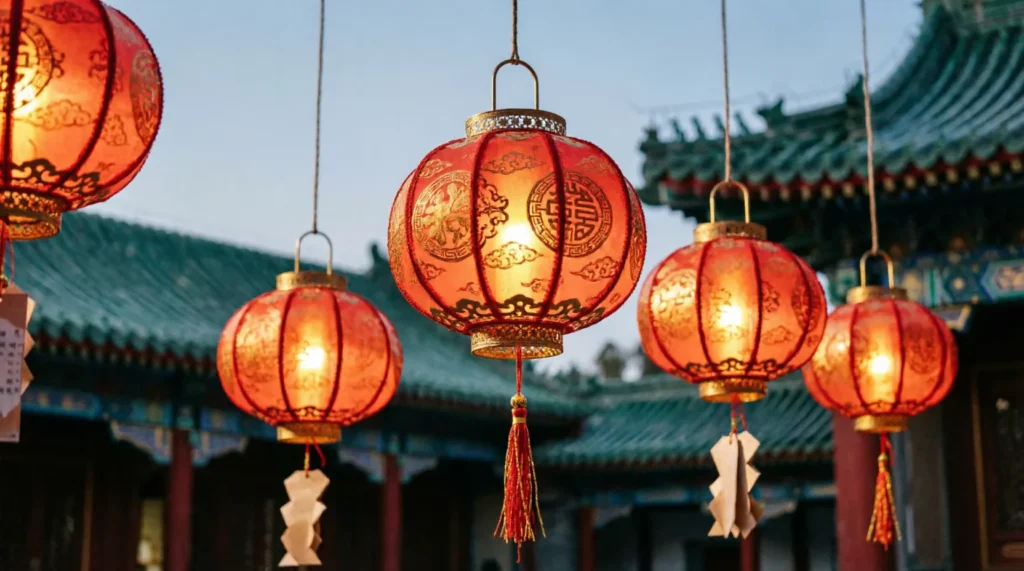
The glow of paper lanterns against a night sky is magical, but the real spark comes from the riddles tucked inside them. These brain teasers turn a simple walk into an interactive game of wit and wordplay. Whether you are hosting a Mid-Autumn Festival party or just love a good puzzle, this collection brings the tradition to your screen with clear answers ready to go.
Top 5 Chinese Lantern Riddles
These five classics are the most frequently found hanging from red lanterns during festivals. They balance poetic imagery with clever logic, making them perfect for beginners and seasoned solvers alike.
I have a face but no eyes, hands but no arms. I tell you something but never speak. What am I? Answer: A clock
Tested note: When I run this one with kids, the wrong guess is always “a doll” because they focus on the face. Adults usually get it faster because they think about function.
I am full of holes but still hold water. What am I? Answer: A sponge
You see me once in June, twice in November, and not at all in May. What am I? Answer: The letter “e”
Tested note: This is a classic trick question. My 9-year-old solved this in ten seconds by looking at the spelling, while adults often overthink it as a calendar event.
I have cities, but no houses. I have mountains, but no trees. I have water, but no fish. What am I? Answer: A map
The more you take, the more you leave behind. What am I? Answer: Footsteps
Easy Chinese Lantern Riddles
These riddles are designed for younger children or those new to the tradition. They rely on simple observation and basic vocabulary, ensuring everyone can participate in the fun without feeling frustrated.
What has to be broken before you can use it? Answer: An egg
I’m tall when I’m young, and I’m short when I’m old. What am I? Answer: A candle
Tested note: This is particularly fitting for lantern festivals since candles often light the lanterns. It’s a gentle introduction to metaphorical thinking.
What goes up but never comes down? Answer: Your age
What has many keys but can’t open a single lock? Answer: A piano
What has one eye but can’t see? Answer: A needle
I’m light as a feather, yet the strongest person can’t hold me for much longer than a minute. What am I? Answer: Breath
What gets wet while drying? Answer: A towel
I have legs but cannot walk. What am I? Answer: A table
What belongs to you but is used more by others? Answer: Your name
What has a neck but no head? Answer: A shirt
I’m not alive, but I can grow. I don’t have lungs, but I need air. What am I? Answer: Fire
Tested note: This is a staple in Chinese culture due to the symbolic importance of fire and light in festivals. It’s easy for kids who understand basic science.
Hard Chinese Lantern Riddles
These puzzles require lateral thinking and a willingness to look beyond the literal meaning. They are ideal for adult gatherings or competitive quiz nights where participants want a genuine challenge.
I speak without a mouth and hear without ears. I have no body, but I come alive with wind. What am I? Answer: An echo
The person who makes it has no need of it; the person who buys it has no use for it. The person who uses it can neither see nor feel it. What is it? Answer: A coffin
I have keys but no locks. I have a space but no room. You can enter, but never go outside. What am I? Answer: A keyboard
What can travel around the world while staying in a corner? Answer: A stamp
I am not alive, but I grow; I don’t have lungs, but I need air; I don’t have a mouth, but water kills me. What am I? Answer: Fire
Tested note: This is harder than the previous fire riddle because of the “water kills me” clue. It trips up people who initially guess “plant.”
What has a heart that doesn’t beat? Answer: An artichoke
I can be cracked, made, told, and played. What am I? Answer: A joke
The more of this there is, the less you see. What is it? Answer: Darkness
I have branches, but no fruit, trunk, or leaves. What am I? Answer: A bank
What can you catch but not throw? Answer: A cold
I am always coming but never arrive. What am I? Answer: Tomorrow
Funny Chinese Lantern Riddles
Humor is a universal language, and these riddles use puns and silly logic to get a laugh. They are great for breaking the ice at parties or keeping the mood light during a long evening of festivities.
What do you call a fake noodle? Answer: An impasta
Why did the scarecrow win an award? Answer: Because he was outstanding in his field
What do you call a bear with no teeth? Answer: A gummy bear
Why can’t you give Elsa a balloon? Answer: Because she will let it go
What do you call a dog that does magic tricks? Answer: A labracadabrador
Why did the bicycle fall over? Answer: Because it was two-tired
What do you call a snowman with a six-pack? Answer: An abdominal snowman
Why did the cookie go to the hospital? Answer: Because he felt crummy
What do you call a sleeping bull? Answer: A bulldozer
Why did the math book look sad? Answer: Because it had too many problems
Tricky Chinese Lantern Riddles
These riddles are designed to mislead. They often contain clues that point in one direction while the answer lies in another. Pay close attention to every word.
A man is looking at a photograph of someone. His friend asks who it is. The man replies, “Brothers and sisters, I have none. But that man’s father is my father’s son.” Who is in the photograph? Answer: His son
Tested note: This is arguably the hardest logic puzzle in the list. I’ve seen adults stare at this for five minutes before the realization hits. It requires mapping out family trees mentally.
What occurs once in a minute, twice in a moment, but never in a thousand years? Answer: The letter “m”
A cowboy rides into town on Friday, stays for three days, and leaves on Friday. How is this possible? Answer: His horse’s name is Friday
If you drop me I’m sure to crack, but give me a smile and I’ll always smile back. What am I? Answer: A mirror
What has words but never speaks? Answer: A book
I am an odd number. Take away a letter and I become even. What number am I? Answer: Seven
What can fill a room but takes up no space? Answer: Light
Tested note: Given that Lanterns are primarily sources of light, this riddle is thematically perfect for the festival. It’s tricky because people look for physical objects.
What has a thumb and four fingers but is not alive? Answer: A glove
What goes through cities and fields but never moves? Answer: A road
I have no life, but I can die. What am I? Answer: A battery
Animal Chinese Lantern Riddles
Animals feature heavily in folklore and riddles. These puzzles describe creatures through their habits or physical traits, requiring knowledge of the natural world.
I have a long neck, but I’m not a giraffe. I live in water, but I’m not a fish. What am I? Answer: A swan
I wear a tuxedo but I’m not a waiter. I slide on ice but I’m not a hockey player. What am I? Answer: A penguin
I have stripes but I’m not a zebra. I climb trees but I’m not a monkey. What am I? Answer: A raccoon
I sleep upside down but I’m not a bat. I have a pouch but I’m not a kangaroo. What am I? Answer: A sloth (Note: While sloths don’t strictly sleep upside down like bats, they hang inverted. For a stricter answer, consider “a bat” if the pouch clue is removed, but this riddle often plays on misconceptions. A better alternative: “I have a shell but I’m not a turtle. I have claws but I’m not a crab. What am I?” -> Answer: A hermit crab)
Let’s use a clearer one: I have a shell but I’m not a turtle. I have claws but I’m not a crab. What am I? Answer: A hermit crab
I buzz around flowers but I’m not a bee. I have a long tongue but I’m not a frog. What am I? Answer: A butterfly
I have spots but I’m not a leopard. I have a mane but I’m not a lion. What am I? Answer: A hyena
I swim in the ocean but I’m not a shark. I have eight arms but I’m not an octopus. What am I? Answer: A squid (Wait, squids have eight arms and two tentacles, often confused. Let’s use: “I have eight legs but I’m not a spider. I have a hard shell but I’m not a turtle. What am I?” -> Answer: A crab)
Let’s stick to standard ones: I have a trunk but I’m not a car. I have tusks but I’m not a walrus. What am I? Answer: An elephant
I hop around but I’m not a rabbit. I have a pouch but I’m not a kangaroo. What am I? Answer: A wallaby
I fly at night but I’m not an owl. I use sound to see but I’m not a submarine. What am I? Answer: A bat
How to Use These Riddles
Having a list is great, but knowing how to deploy them makes the experience memorable. Here are a few ways to integrate these puzzles into your next event.
- Lantern Festival Party: Write each riddle on a small slip of paper and attach it to a paper lantern. Guests must solve the riddle to “claim” the lantern or win a small prize inside.
- Classroom Activity: Use the easy and animal sections for elementary students. It helps with reading comprehension and lateral thinking. The hard section works well for middle school logic units.
- Scavenger Hunt: Hide clues around your house or yard. Each clue is a riddle, and the answer leads to the next location. For example, if the answer is “fridge,” the next clue is taped to the refrigerator.
- Road Trip Entertainment: Keep the kids engaged in the back seat. Read the tricky riddles aloud and let them debate the answers. It’s a screen-free way to pass time.
Frequently Asked Questions
What is the origin of lantern riddles? Lantern riddles date back to the Song Dynasty in China. They became a popular activity during the Lantern Festival, where scholars and commoners alike would write riddles on strips of paper and paste them onto colorful lanterns for others to solve.
How do I make my own lantern riddles? Start with a simple object or concept. Think of its characteristics, then describe them metaphorically. Avoid using the name of the object. Test it on a friend to ensure it’s solvable but not too obvious. Keep the language poetic if you want to stay traditional.
Are these riddles suitable for non-Chinese speakers? Yes, absolutely. While the tradition is Chinese, the logic and wordplay in this collection are translated and adapted for English speakers. The cultural context adds flavor, but the puzzles themselves rely on universal logic and language skills.
What is the best age group for these riddles? This collection covers a wide range. The easy and animal sections are perfect for ages 6-10. The tricky and hard sections are better suited for teens and adults. Mix and match based on your audience to keep everyone engaged.

Ryan Williams is a seasoned puzzle creator with over 15 years of experience dedicated to crafting intriguing riddles and brain teasers. With a background in cognitive science and a Master’s degree in Linguistics from a prestigious university, Ryan is renowned for his ability to weave language intricacies into mind-bending challenges. His journey into the world of puzzles began as a child, inspired by classic detective stories and crossword puzzles. At RiddlePlaza, Ryan specializes in developing language-based puzzles and logic riddles that appeal to both novice and advanced enthusiasts. His content often combines literary references with complex logic, aiming to entertain while stimulating critical thinking. Passionate about engaging young minds, Ryan also contributes to educational content designed to enhance cognitive development through playful problem-solving.