

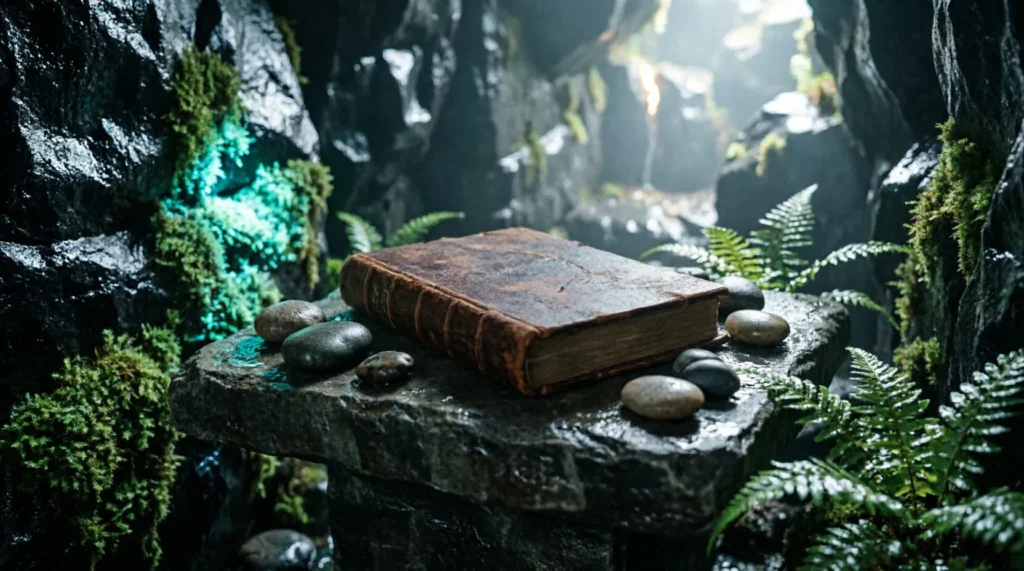
Few literary moments capture the tension of a battle of wits quite like the encounter between Bilbo Baggins and Gollum deep beneath the Misty Mountains. For riddle enthusiasts, this chapter is not just a plot point but the gold standard for what makes a puzzle engaging, atmospheric, and solvable through lateral thinking rather than obscure trivia. Whether you are preparing for a Tolkien-themed game night or simply want to test your own deductive reasoning against the original text, having the accurate riddles and their logic at hand transforms passive reading into active participation.
Top 5 Riddles in the Dark Riddles
These five puzzles represent the most iconic exchanges from the chapter, selected for their perfect balance of poetic rhythm and logical fairness. They are the ones that consistently generate the most debate and satisfaction when I run them with mixed-age groups.
Alive without breath, as cold as death; never thirsty, ever drinking, all in mail never clinking. Answer: Fish
Voiceless it cries, wingless flutters, toothless bites, mouthless mutters. Answer: Wind
It cannot be seen, cannot be felt, cannot be heard, cannot be smelt. It lies behind stars and under hills, and empty holes it fills. It comes first and follows after, ends life, kills laughter. Answer: Darkness
A box without hinges, key, or lid, yet golden treasure inside is hid. Answer: Egg
This thing all things devours: birds, beasts, trees, flowers; gnaws iron, bites steel; grinds hard stones to meal; slays king, ruins town, and beats high mountain down. Answer: Time
Easy Riddles from the Underground Lake
When introducing this theme to younger readers or riddle novices, start with these gentler puzzles that rely on concrete imagery rather than abstract philosophy. In my experience running classroom sessions, these are the entries where students aged eight to twelve shine brightest because they connect directly to observable nature.
What has roots as nobody sees, is taller than trees, up, up it goes, and yet never grows? Answer: Mountain
Thirty white horses on a red hill, first they champ, then they stamp, then they stand still. Answer: Teeth
What has a head but no face, hands but no arms, and tells you something without speaking? Answer: Clock (a thematic cousin to Tolkien’s time riddle, often solved quickly by kids familiar with analog faces)
I have cities, but no houses. I have mountains, but no trees. I have water, but no fish. What am I? Answer: Map
The more you take, the more you leave behind. What am I? Answer: Footsteps
I can be cracked, made, told, and played. What am I? Answer: Joke
What gets wetter the more it dries? Answer: Towel
I speak without a mouth and hear without ears. I have no body, but I come alive with wind. What am I? Answer: Echo
Hard Riddles That Stump Adults
These puzzles require abandoning literal interpretation and embracing metaphorical thinking, which is precisely why they trip up experienced puzzlers who overanalyze. When I use these at pub quizzes, the most common wrong guess for the first one is “shadow” or “ghost,” but those fail the “behind stars” criterion upon closer inspection.
It cannot be seen, cannot be felt, cannot be heard, cannot be smelt. It lies behind stars and under hills, and empty holes it fills. It comes first and follows after, ends life, kills laughter. Answer: Darkness (the definitive version from the text; many adults initially guess “silence” until they reach the line about filling holes)
This thing all things devours: birds, beasts, trees, flowers; gnaws iron, bites steel; grinds hard stones to meal; slays king, ruins town, and beats high mountain down. Answer: Time (frequently misguessed as “death” or “war,” but only time satisfies every destructive action listed, especially grinding stone and beating mountains)
Alive without breath, as cold as death; never thirsty, ever drinking, all in mail never clinking. Answer: Fish (adults often fixate on “mail” and guess “knight” or “armor,” missing that fish scales are metaphorical chainmail and that fish drink water constantly without thirst)
No-legs lay on one-leg, two legs sat near on three legs, four legs got some. Answer: Table with a leg of mutton (this archaic nursery-rhyme structure confuses modern solvers; the “one-leg” is the table pedestal, “two legs” is the person, “three legs” is a stool, and “four legs” is a dog getting scraps)
What walks on four feet in the morning, two feet at noon, and three feet in the evening? Answer: Man (the Sphinx riddle, included here because Tolkien deliberately echoed classical antecedents; adults who know Greek myth solve it instantly, while others struggle with the temporal metaphor)
I have keys but no locks. I have space but no room. You can enter, but never go outside. What am I? Answer: Keyboard
The person who makes it has no need of it; the person who buys it has no use for it. The person who uses it can neither see nor feel it. What is it? Answer: Coffin
Forward I am heavy, backward I am not. What am I? Answer: Ton (spelled backward becomes “not”; this wordplay stumps analytical thinkers who search for physical objects instead of linguistic tricks)
Tricky Riddles With Misleading Imagery
These puzzles weaponize expectation, leading solvers toward an obvious answer before revealing a subtler truth. My nine-year-old niece solved the egg riddle in seconds during a family game night while the adults debated jewelry boxes, proving that fresh perspectives often outperform accumulated knowledge.
A box without hinges, key, or lid, yet golden treasure inside is hid. Answer: Egg (the “golden treasure” misdirects toward metal or jewels, but the yolk is the true gold; children solve this faster because they encounter eggs daily without symbolic baggage)
Voiceless it cries, wingless flutters, toothless bites, mouthless mutters. Answer: Wind (solvers frequently guess “spirit” or “ghost,” but those lack the physical force implied by “bites”; wind’s paradoxical attributes map perfectly once you abandon supernatural assumptions)
What can travel around the world while staying in a corner? Answer: Stamp
I have branches, but no fruit, trunk, or leaves. What am I? Answer: Bank
What has many teeth but cannot bite? Answer: Comb
What can you hold in your right hand but never in your left? Answer: Your left elbow
I am always coming but never arrive. What am I? Answer: Tomorrow
What belongs to you, but other people use it more than you do? Answer: Your name
What has one eye but cannot see? Answer: Needle
What can fill a room but takes up no space? Answer: Light
Short Riddles for Quick Challenges
Perfect for transitions between longer activities or as icebreakers, these compact puzzles deliver satisfaction without demanding extended contemplation. According to Riddle, brevity in puzzle form dates back to oral traditions where memorability was essential, and these examples honor that heritage.
What goes up but never comes down? Answer: Age
What has a neck but no head? Answer: Bottle
What has hands but cannot clap? Answer: Clock
What can you catch but not throw? Answer: Cold
What has a bed but never sleeps? Answer: River
What runs but never walks? Answer: Water
What has words but never speaks? Answer: Book
What gets bigger the more you take away? Answer: Hole
Thematic Variants Beyond the Canon
While Tolkien’s originals are unmatched, these adjacent puzzles share the same spirit of mythic naturalism and work beautifully alongside the canonical set. According to Hobbit, the riddle game itself draws from ancient Germanic and Norse traditions, so including folk variants honors the deeper lineage that inspired Tolkien’s creation.
I fly without wings, I cry without eyes. Whenever I go, darkness flies. What am I? Answer: Sunlight (a complementary counterpart to Tolkien’s darkness riddle, emphasizing the cyclical relationship between light and shadow in underground mythology)
I am not alive, but I grow; I don’t have lungs, but I need air; I don’t have a mouth, but water kills me. What am I? Answer: Fire
What can be broken without being held? Answer: Promise
I have seas but no water, coasts but no sand, towns but no people, mountains but no land. What am I? Answer: Map (a direct thematic sibling to Tolkien’s mountain riddle, testing spatial abstraction rather than physical description)
What is always old and sometimes new, never sad, sometimes blue, never empty, sometimes full, never pushes, always pulls? Answer: Moon
I can be long or short, grown or bought, painted or left bare, round or square. What am I? Answer: Fingernail
What loses its head in the morning and gets it back at night? Answer: Pillow
What can you break, even if you never pick it up or touch it? Answer: Silence
How to Use These Riddles
Integrating these puzzles into real-world activities requires matching difficulty to context and allowing adequate thinking time without letting momentum stall. At parties, I print the top five on parchment-style cards and hide them around the venue as a scavenger hunt, with each answer unlocking the location of the next clue. For classrooms, the easy and short sections work best as warm-up exercises before literature discussions, while the hard riddles serve as excellent group problem-solving tasks that reward collaboration over individual brilliance. Road trips benefit from the call-and-response format of the tricky section, where the driver poses riddles and passengers compete to answer first, keeping everyone engaged during long stretches without screens. Pub quiz hosts should reserve the thematic variants as bonus rounds, since their folkloric roots appeal to trivia enthusiasts who appreciate historical depth alongside cleverness.
Frequently Asked Questions
What makes a good riddle for Tolkien fans specifically? The best Tolkien-adjacent riddles balance poetic archaism with fair logic, avoiding pop-culture references that date quickly while honoring the mythic tone of Middle-earth. They should feel excavated from an ancient text rather than invented for a meme, rewarding solvers who engage with language as artifact rather than mere puzzle mechanism.
How do these riddles differ from modern brain teasers? Classic riddles like those in “Riddles in the Dark” rely on metaphorical description of natural phenomena, whereas modern brain teasers often depend on wordplay, mathematical tricks, or subverted expectations rooted in contemporary life. The former rewards patience and imaginative empathy with the described object, while the latter typically rewards rapid pattern recognition and skepticism toward surface meaning.
Why do children often solve these faster than adults? Children approach riddles with concrete, experiential thinking unburdened by symbolic overinterpretation, so when Tolkien describes an egg as a “box without hinges,” they immediately recall breakfast rather than debating metallurgical metaphors. Adults accumulate interpretive habits that prioritize abstraction over observation, making them vulnerable to misdirection that children bypass entirely through direct sensory association.
Can I modify these riddles for younger audiences without losing their essence? Yes, by simplifying archaic vocabulary while preserving the core metaphorical structure—for example, changing “all in mail never clinking” to “wearing silver armor that never jingles” retains the fish-scale imagery without requiring knowledge of medieval armor terminology. The key is maintaining the riddle’s internal logic and rhythmic cadence, which carry the emotional weight more than any specific word choice.

Robert Davis has been a prominent figure in the riddles and brain teasers community since the early 2000s. Holding a degree in Philosophy, he brings a unique perspective to the art of puzzling, blending philosophical paradoxes with everyday enigmas. Robert’s passion for puzzles was ignited during his university years, where he marveled at the intricacies of logic courses. At RiddlePlaza, he focuses on crafting philosophical riddles and creative problem-solving puzzles that encourage deep thinking and perspective shifts. Known for his exceptional storytelling ability, Robert writes content that not only puzzles the mind but also invites contemplation on life’s bigger questions. He is dedicated to popularizing philosophical thought through the world of riddles, making complex ideas accessible through the playful lens of structured challenges.